Why is my AC not cooling in Hermitage?
Your AC is running but the air from your vents feels warm, or barely cool. Here is what to check first in your Hermitage home, what the most common culprits are, and when it is time to call in a pro.
When the July heat parks over Hermitage and your AC starts blowing warm air, it gets miserable fast. The good news: the fix is often something simple you can check yourself in five minutes. The not so good news: a few of the common causes need a professional, and guessing wrong can turn a small repair into a big one.
Here is an honest walkthrough of what usually goes wrong, the safe checks to run first, and when to call Hvac Repair Pro at (615) 850-8750. Our dispatch runs 24/7 from 3440 Lebanon Pike, so help is close no matter where you are in the 37076.
Why is my AC blowing warm air?
In almost every no-cool call we run across Bridgewater, Tulip Grove, and the Villages of Riverwood, the cause is one of these:
- Thermostat set wrong: it sounds obvious, but fan set to ON instead of AUTO is the number one culprit. On ON, the blower keeps pushing room-temperature air between cooling cycles.
- Dirty air filter: a clogged filter chokes airflow, which can freeze the evaporator coil and leave you with weak, warm air.
- Tripped breaker: the outdoor unit sits on its own breaker. If it trips, the indoor blower still runs, so your vents push air that never got cooled.
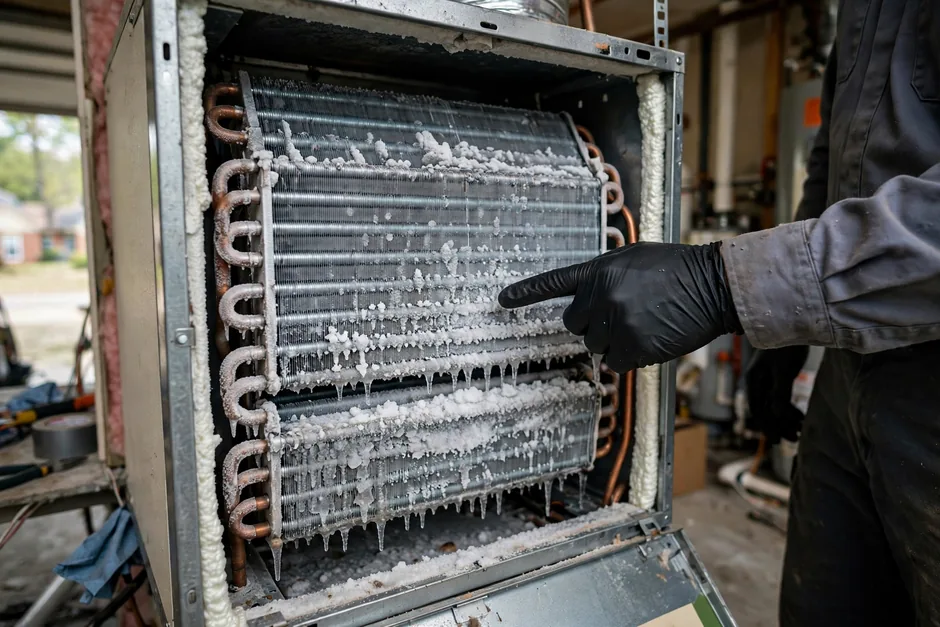
- Frozen evaporator coil: ice on the indoor coil or the copper lines outside blocks heat transfer. Low airflow or low refrigerant usually causes it.
- Low refrigerant from a leak: refrigerant is a sealed loop, so a low charge means there is a leak. Expect warm air, maybe a hissing sound, and ice on the lines.
- Failing capacitor: this small part starts the compressor and fan motors. When it dies, the outdoor unit may hum and do nothing.
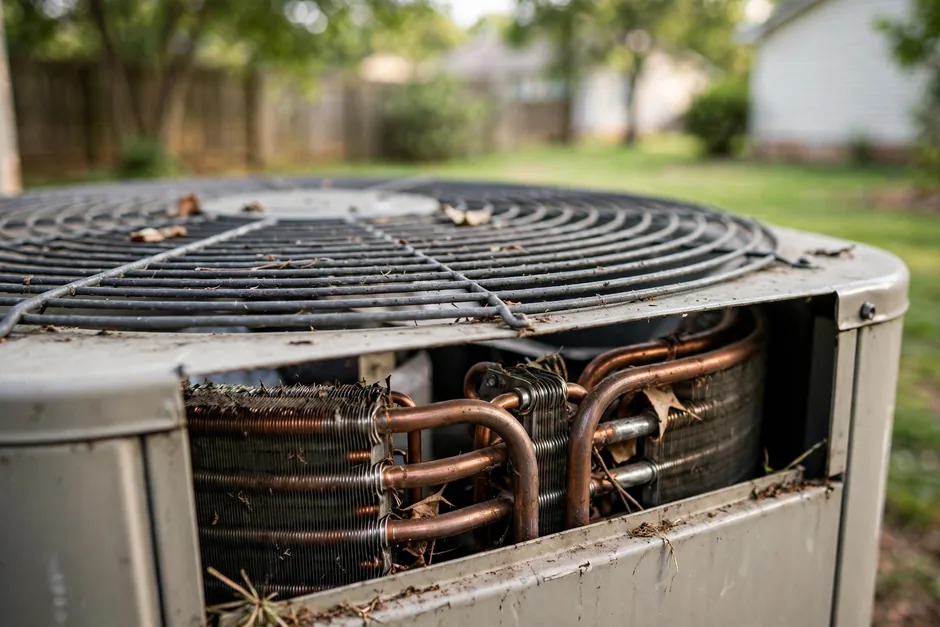
- Dirty condenser coil: the outdoor unit dumps your home's heat outside. Coat it in grass clippings, leaves, or spring cottonwood and it cannot breathe.
- Duct problems: disconnected or leaky ducts in a hot attic can lose a big share of your cool air before it ever reaches the rooms.
What should I check before calling?
Run these five checks in order. They are safe, they take minutes, and they solve a surprising share of no-cool calls. This is honest DIY: the checks below, not opening electrical panels or handling refrigerant, which always needs a trained tech.
- Thermostat: set it to COOL, fan to AUTO, and drop the setpoint a few degrees below the room reading. If the display is blank, swap the batteries.
- Air filter: pull it out and hold it to the light. If you cannot see light through it, replace it. A cheap filter fixes more "broken" ACs than you would think.
- Breakers: check the breaker labeled for the AC or outdoor unit. If it is tripped, reset it once. If it trips again, stop and call us. That is a sign of an electrical fault.
- Outdoor unit: clear leaves, grass clippings, and debris from around the condenser, and trim plants back about two feet. Do not hose down the inside or remove any panels.
- Vents and registers: make sure supply vents are open and not blocked by rugs or furniture. Closing vents to "push air elsewhere" actually raises pressure and strains the system.
If you made it through that list and the air is still warm, you are past DIY territory. That is a fair time to look into emergency AC repair rather than letting the system struggle through a heat wave.
What NOT to do while your AC won't cool
A few things homeowners do that make it worse:
- Do not keep running a frozen system. If you see ice on the indoor coil or the copper lines, switch the system to OFF (or fan only) and let it thaw completely, usually several hours. Running it frozen can send liquid refrigerant back to the compressor and destroy it.
- Do not ask for a "freon top-off" and call it fixed. Refrigerant never gets used up. If it is low, there is a leak, and topping it off without finding and repairing the leak means you will be paying for it again next summer.
- Do not crank the thermostat way down. Setting 72 to 65 does not cool the house faster. The system is either on or off. All you get is a longer run and a higher bill.
- Do not poke at capacitors or wiring. Capacitors hold a charge even with the power off and can give you a serious shock. That part is always a job for a tech.
Why is this so common in Hermitage summers?
Middle Tennessee is rough on air conditioners. July afternoons average around 91 degrees, and the cooling season runs long, which wears out capacitors and contactors faster than in milder climates. Spring storms pack outdoor condensers with leaves, grass clippings, and cottonwood fluff, so the unit cannot shed heat. And humidity is the quiet troublemaker: your AC does not just cool the air, it wrings gallons of moisture out of it every day. When the condensate drain line clogs with algae, a float switch can shut the whole system down, which feels exactly like a dead AC.
Humidity also explains a classic Hermitage complaint: the house feels cold and clammy at the same time. That usually means the system is oversized and short-cycling, cooling the air too fast to dehumidify it. Bigger is not better here, and it is one reason a spring AC tune-up pays for itself before the first real heat wave.
Can a dirty filter stop my AC from cooling?
Yes, and it is the most common cause we see. Air has to pass through the filter before it reaches the evaporator coil. When the filter is packed with dust, pollen (Middle Tennessee has plenty of both), and pet hair, airflow drops. Low airflow lets the coil get too cold, ice forms, and suddenly your vents are blowing weak, barely-cool air. Swap the filter, give the system time to thaw, and check again. If it freezes up a second time with a clean filter, that points to low refrigerant or a blower problem, and that is a job for a tech.
When is it time to call a pro in Hermitage?
Call a pro when any of these are true: ice comes back after a full thaw with a clean filter; the breaker trips a second time; you hear hissing or bubbling near the refrigerant lines; you smell something burning or see scorched wiring; water is pooling around the indoor unit and the drain looks clear; or the system simply will not cool after every check above. Those are signs of refrigerant, electrical, or compressor problems that need proper tools and training.
Our dispatch is open around the clock, so a midnight no-cool call gets answered by a person, not a voicemail. We run calls across Hermitage daily, from Bridgewater to Tulip Grove. For general upkeep between visits, ENERGY STAR's cooling maintenance tips are a solid homeowner reference.
Frequently Asked Questions
- 1. How often should I change my AC filter? Every 1 to 3 months during cooling season, and monthly if you have pets or run the system constantly. Hermitage gets heavy spring pollen from oak and cedar, so check the filter when pollen peaks and again in late summer.
- 2. What are the signs of low refrigerant? Warm or lukewarm air from the vents, ice forming on the copper refrigerant lines or the indoor coil, a hissing or bubbling sound near the unit, and a system that runs for hours without reaching the set temperature. Refrigerant circulates in a sealed loop, so a low charge always means there is a leak that needs to be found and repaired.
- 3. How can I keep my AC efficient during humid Tennessee summers? Change the filter on schedule, keep grass clippings and debris at least two feet from the outdoor condenser, keep supply vents open and unblocked, and get a yearly tune-up before summer. Let the system run full cooling cycles so it can dehumidify: constant thermostat fiddling or an oversized unit leaves the air cold and clammy instead of comfortable.
- 4. What does an AC tune-up actually involve? A real tune-up is a diagnostic visit, not a quick hose-down. The technician should test the capacitor and contactor, measure refrigerant pressures, clean the condenser and evaporator coils, clear the condensate drain line, check electrical connections, and verify airflow and temperature drop across the coil. Ask for the readings: a good tech will share them.
- 5. How long does an AC repair usually take? Common fixes like a failed capacitor or contactor, or a clogged drain line, are usually done in one visit, often within a couple of hours. Repairs that need ordered parts, like a compressor or an evaporator coil, can take a few days depending on parts availability. Either way, you should get a clear diagnosis and timeline before any work starts.
Get help with AC repair in Hermitage
If your AC still isn't cooling after the checks above, give us a call at (615) 850-8750. We will find the real cause and fix it right, day or night.