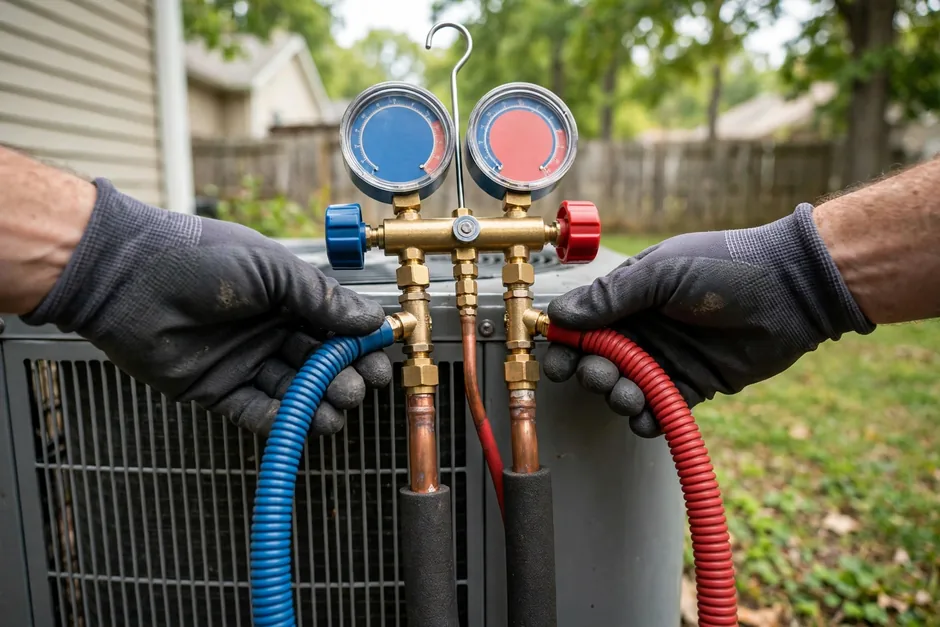
Low refrigerant is a symptom, not a refill.
AC Gas Charging & Leak Detection in Hermitage, Tennessee
If your AC keeps needing freon, there's a leak somewhere in the loop. We find it first with nitrogen testing, electronic detection, or UV dye, then charge the system to the manufacturer's exact spec. That's the only kind of charge that lasts.
Live dispatcherUpfront optionsClear written scope
What's included
What's Included in This Service
Leak search first, charge second. That's the order, and we don't skip the first part.
Leak Search First
Nitrogen pressure test, electronic sniffing, and UV dye to find the actual leak point. We don't top off blindly.
Charge to Spec
Manifold gauges, superheat and subcooling targets, and refrigerant weighed in for R-410A systems.
Sealed-Loop Verification
We re-check pressures after the repair to confirm the leak is closed and the charge holds.
Written Findings
What we found, what we charged, and what to watch for next summer, in writing.
Service overview
How Refrigerant Charge Affects Cooling
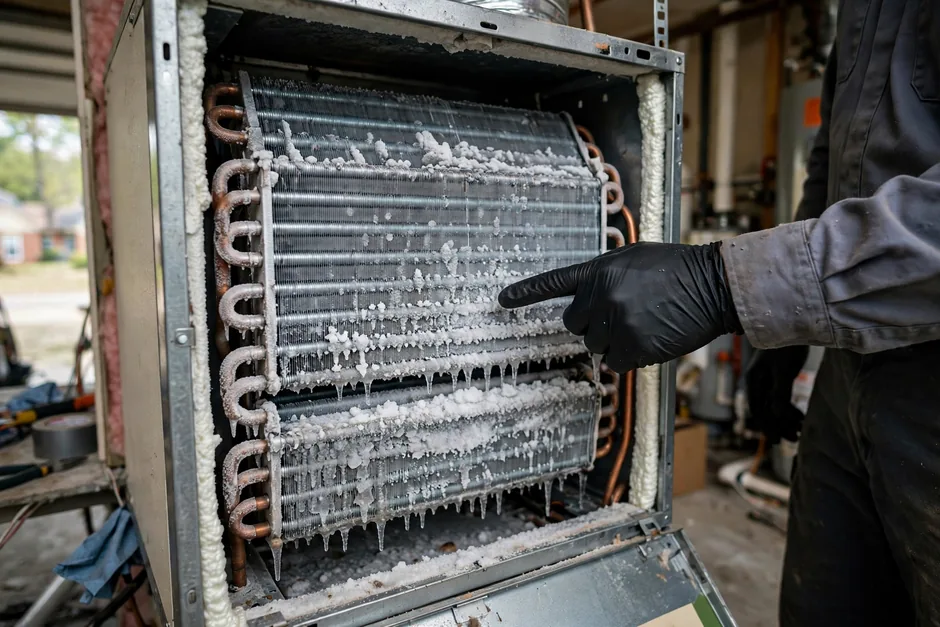
Refrigerant is a sealed loop. It never gets used up, so a system that's low has a leak, and every "just needs freon" story in Middle Tennessee ends the same way: a top-off in June, ice on the lines by August, and another bill. The honest fix is finding the leak, sealing it, and charging to spec.
We see this most in Hermitage's older brick ranches, the ones in Hermitage Hills and Stones River Estates built in the 60s and 70s, still running aging systems through July highs around 91 degrees. A starved system runs longer, cools less, and frosts over, which is why a spring tune-up that checks charge before the season matters. At Hvac Repair Pro, dispatch runs 24/7 out of our Lebanon Pike office, so a low-charge call from Bridgewater or anywhere in 37076 gets same-day attention. And if your system is limping along at night, our emergency AC repair runs the same leak-first process after hours.
One more thing worth knowing: if your unit still runs R-22, the math changes. R-22 was phased out, it's scarce and expensive, and on a system past ten years old, recharging it can cost more than the unit is worth. We'll lay out both paths, repair or replace, with honest numbers. Newer R-410A systems carry SEER2 efficiency ratings that make the repair-versus-replace math much clearer, and Carrier's refrigerant resources explain why matching the right refrigerant to the system matters.
How we workWe verify the cause, compare realistic options, and confirm the repair before we leave.
The service timeline
How a Visit Goes
The process flexes to the condition, but these checkpoints keep decisions clear.
Call and Triage
A live dispatcher takes your symptoms, asks about hazards, and books a same-day window across Hermitage and Davidson County.
Pressure and Leak Test
We isolate sections of the loop and pressurize with nitrogen, then narrow the spot with an electronic detector or UV dye.
Repair the Leak Point
Valve cores, flare fittings, and coil joints get repaired or replaced, with the price approved by you first.
Charge and Verify
Refrigerant is weighed in and checked against superheat and subcooling targets, then re-verified after the system runs.
Final Report
You get the pressure readings, what was fixed, and what to watch for, so next summer has a baseline.
Tools & methods
The Gear Behind the Work
Purpose-built equipment, used by trained technicians, so the job is done accurately the first time.
Manifold Gauges
Live pressure readings during the charge, matched to superheat and subcooling targets.
Nitrogen Pressure Test
Sections of the loop get isolated and pressurized to confirm a leak and find its neighborhood.
Electronic Detector & UV Dye
The detector narrows the spot; dye that glows under a blacklight pinpoints it exactly.
Vacuum Pump
Pulls moisture and air out of the system before any refrigerant goes in.
Use cases
Signs It's a Refrigerant Problem
These are the calls we actually get in 37076. If one sounds familiar, the pattern is worth knowing.
Warm Air After a Charge
A tech added freon in June and cooling faded by July. The leak was never found. A nitrogen test located it at a line-set flare fitting, which got repaired before the second charge.
The Annual Top-Off Trap
A Villages of Riverwood home got charged every June for three years. UV dye traced a pinhole in the evaporator coil. With the repair priced against the unit's age, the homeowner chose replacement, and the summer top-off ritual ended.
Problems we solve
Refrigerant Issues We Solve
Low charge is always a symptom. We treat the cause.
Systems that need freon every summer
That's a leak, not a habit. We find it, fix it, and charge once, to spec.
Ice on coils or copper lines
Airflow or charge. We check both before a single ounce of refrigerant goes in.
High bills with weak cooling
Starved systems run long and cool little. Proper charge restores capacity.
Pricing process
What Gas Charging & Leak Detection Typically Costs
$150 - $300 depending on scope
Leak location
A valve core and a coil pinhole are very different jobs. The test tells us which one it is before you approve anything.
Refrigerant type
R-410A recharges cost far less than R-22, which was phased out and is scarce. We tell you which you have.
System age
Older systems sometimes pencil out better as a replacement. We show both numbers and let you decide.
What to expect
What to Expect When You Book
STEP 1
The call
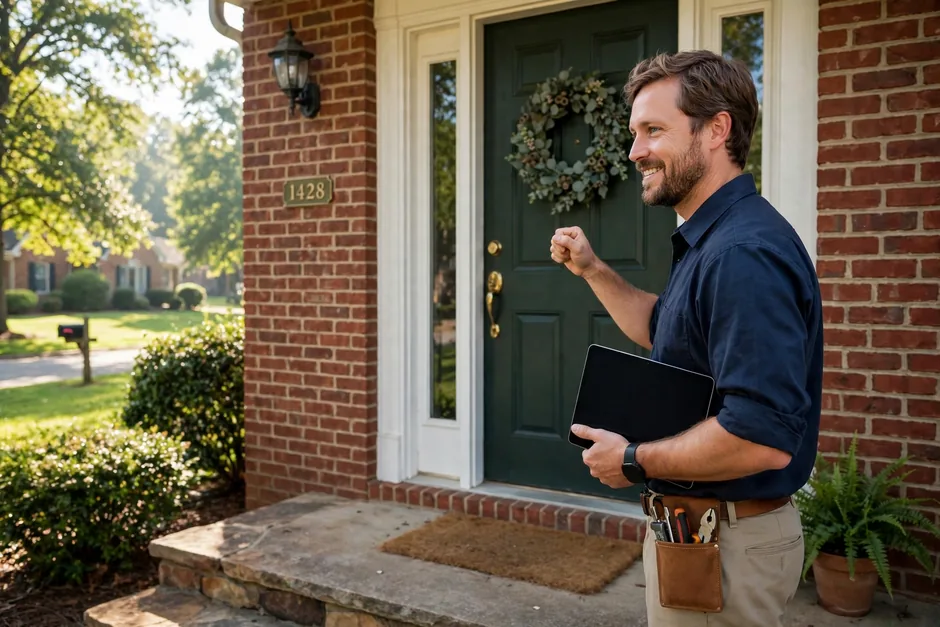
A live dispatcher takes your symptoms, checks for hazards like burning smells or water near electrical, and books a same-day window. No phone tree.
STEP 2
Upfront options
The tech shows you the leak test results and prices each option before work starts. You approve the number. Nothing hidden.
STEP 3
Proof it holds
After the charge, we re-check pressures and hand you the numbers in writing, plus what to watch for next summer.
Does my AC just need freon?
No, and that's the most expensive myth in cooling. Refrigerant is a sealed loop: it never gets 'used up,' so a low charge means a leak. We find the leak first with a nitrogen pressure test, electronic detector, or UV dye, repair the spot, then charge to the manufacturer's spec using superheat and subcooling targets. A charge without a repair is a bandage with a price tag.
My unit still uses R-22. What are my options?
R-22 was phased out, so it's scarce and expensive. Recharging an R-22 system can cost more than the repair is worth, especially on a unit past ten years old. We'll price both paths, repair and replacement, with honest math so you can decide.
Why does my AC freeze up after someone added freon?
Ice on the lines after a charge usually means the leak was never found or the charge is off. Turn the system off but run the fan only to thaw the coil, check your filter, and call if it refreezes. We'd start with a nitrogen test instead of another top-off.
How much does AC gas charging and leak detection cost in Hermitage?
Typical jobs land in the $150-$300 range, depending on the refrigerant type, where the leak is, and the system's age. You approve the exact number before any work starts.
How do you actually find a refrigerant leak?
Three tools, used in order: a nitrogen pressure test to confirm the system is losing pressure, an electronic leak detector to narrow the spot, and UV dye that glows under a blacklight to pinpoint it. The dye stays in the system, so if a second leak ever appears, it's easier to trace.
Related services
Related Services
AC Maintenance & Tune-Up
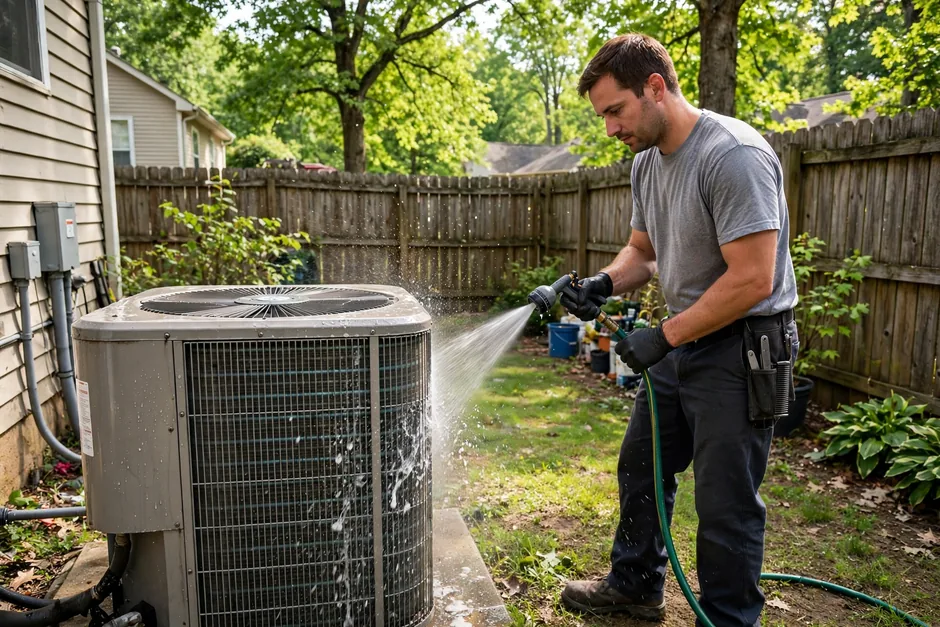
A spring tune-up checks charge, airflow, and the drain line before summer heat, so small issues don't become July breakdowns.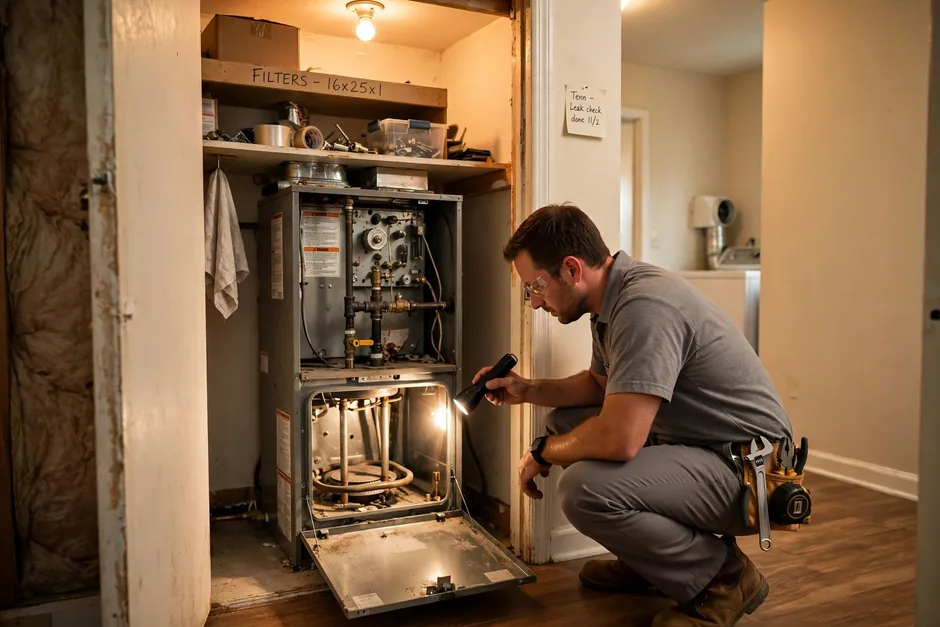
Heating / Furnace Repair & Installation
Gas furnaces and heat pumps checked, repaired, and replaced, sized right for Davidson County winters.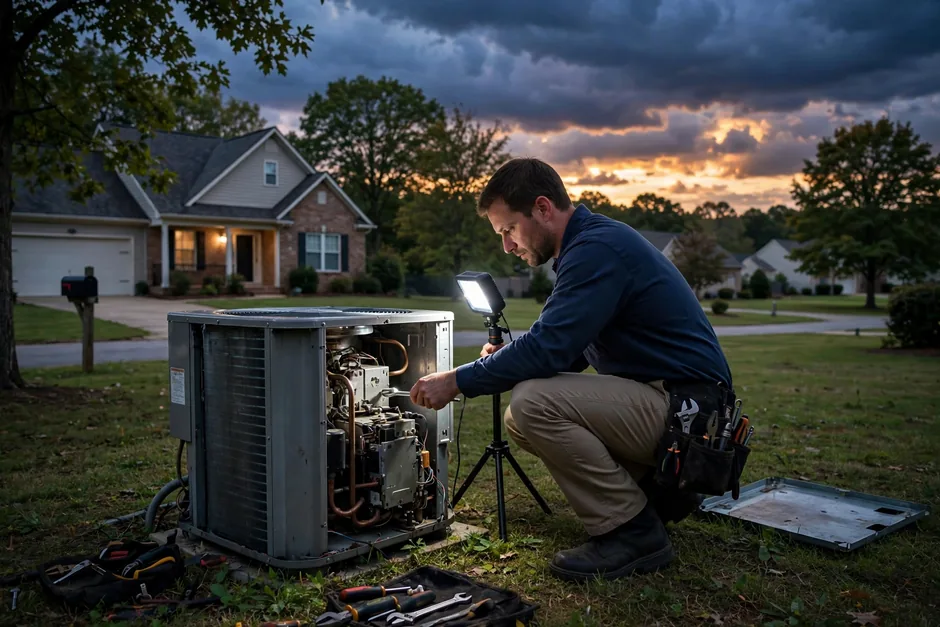
Emergency AC Repair
When the system dies on a 95-degree night, live dispatch and same-day appointments get you back to cool.Ready when you are
Stop Paying for Freon Every Summer
Call (615) 850-8750. We'll find the leak, fix it, and charge the system once, to spec, so you can stop buying the same repair twice.
Talk with the local team
Request AC Gas Charging & Leak Detection
Reach out to us for any questions or to schedule an appointment. We respond quickly and are available to assist you.